Farakka Barrage and Its Impacts on Water Security, Environmental Degradation, and Biodiversity Loss in Bangladesh
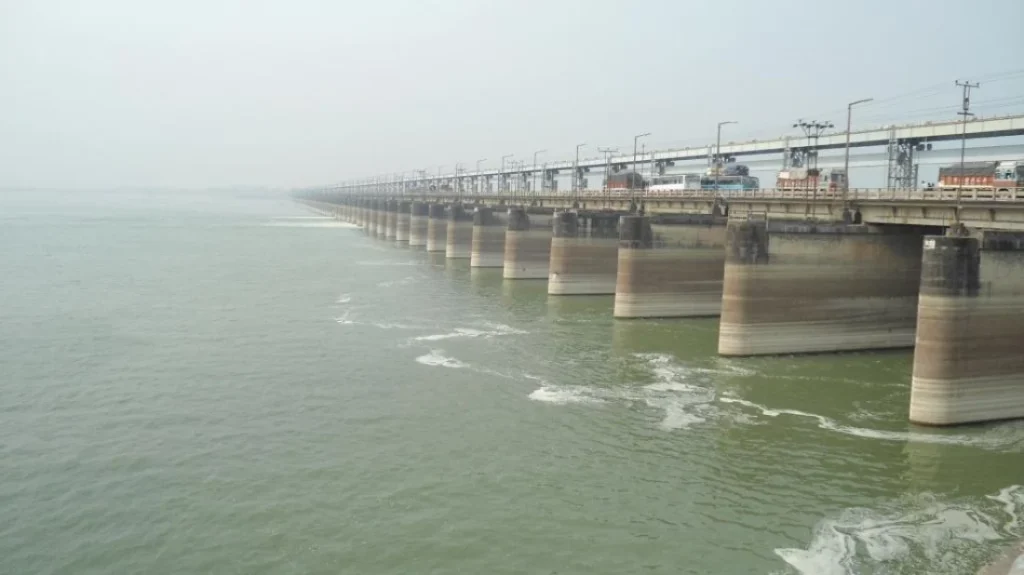
Bangladesh, a lower riparian country located at the downstream end of several major transboundary river systems, is critically dependent on upstream water flows for sustaining its ecological balance, agricultural productivity, biodiversity, and socio-economic stability. Among the various upstream hydraulic interventions influencing Bangladesh’s river systems, the Farakka Barrage constructed by India on the Ganges River and commissioned in 1975 stands out as one of the most controversial and environmentally consequential water-control structures in South Asia. Although the barrage was designed primarily to divert dry-season flows toward the Hooghly River to maintain navigability at the Kolkata Port, its downstream impacts on Bangladesh have been extensive, persistent, and multifaceted.
This paper presents a comprehensive assessment of the hydrological, environmental, ecological, agricultural, and socio-economic impacts of the Farakka Barrage on Bangladesh. Drawing on secondary data from hydrological records, peer-reviewed scientific literature, ecological assessments, and policy documents, the study examines long-term changes in river discharge, sediment transport, river morphology, groundwater dynamics, salinity intrusion, ecosystem health, and biodiversity. Particular attention is given to dry-season water scarcity, agricultural stress, freshwater and mangrove biodiversity loss, and the progressive degradation of the Sundarbans the world’s largest contiguous mangrove ecosystem.
The findings indicate that unilateral upstream water diversion has significantly reduced dry-season flows of the Ganges–Padma system, intensifying water insecurity, accelerating environmental degradation, and undermining the livelihoods of millions of people in downstream Bangladesh. The study argues that sustainable management of the Ganges basin requires basin-wide cooperative governance, effective enforcement of environmental flow requirements, and adherence to the principles of international water law. The paper concludes by emphasizing that transboundary rivers must be managed as shared ecological systems rather than isolated engineering assets to ensure long-term environmental sustainability, regional stability, and environmental justice in South Asia.
Introduction
Rivers have shaped the physical landscape, ecological systems, cultural heritage, and economic foundations of Bangladesh for thousands of years. Situated at the confluence of the Ganges, Brahmaputra, and Meghna river systems, Bangladesh forms one of the largest and most dynamic deltaic regions in the world. More than 700 rivers and tributaries crisscross the country, supporting agriculture, fisheries, wetlands, navigation, and biodiversity while sustaining the livelihoods of millions of people. However, Bangladesh’s geographical position as a downstream or lower riparian nation also makes it acutely vulnerable to upstream water interventions.
Approximately 92% of Bangladesh’s surface water originates outside its national boundaries, primarily from India, Nepal, Bhutan, and China (Mirza, 2004). Consequently, any alteration in upstream river flow regimes through dams, barrages, diversions, or withdrawals has direct and often profound implications for Bangladesh’s water security and environmental sustainability. Among all such interventions, the Farakka Barrage on the Ganges River represents the most significant and enduring challenge for downstream Bangladesh.
Constructed by India near the Indo-Bangladesh border and commissioned in 1975, the Farakka Barrage was designed to divert dry-season water from the Ganges into the Hooghly River to flush sediments and maintain navigabilit.